
The Ultimate Travel Guide to South Africa: Discover the Best Destinations

Introduction
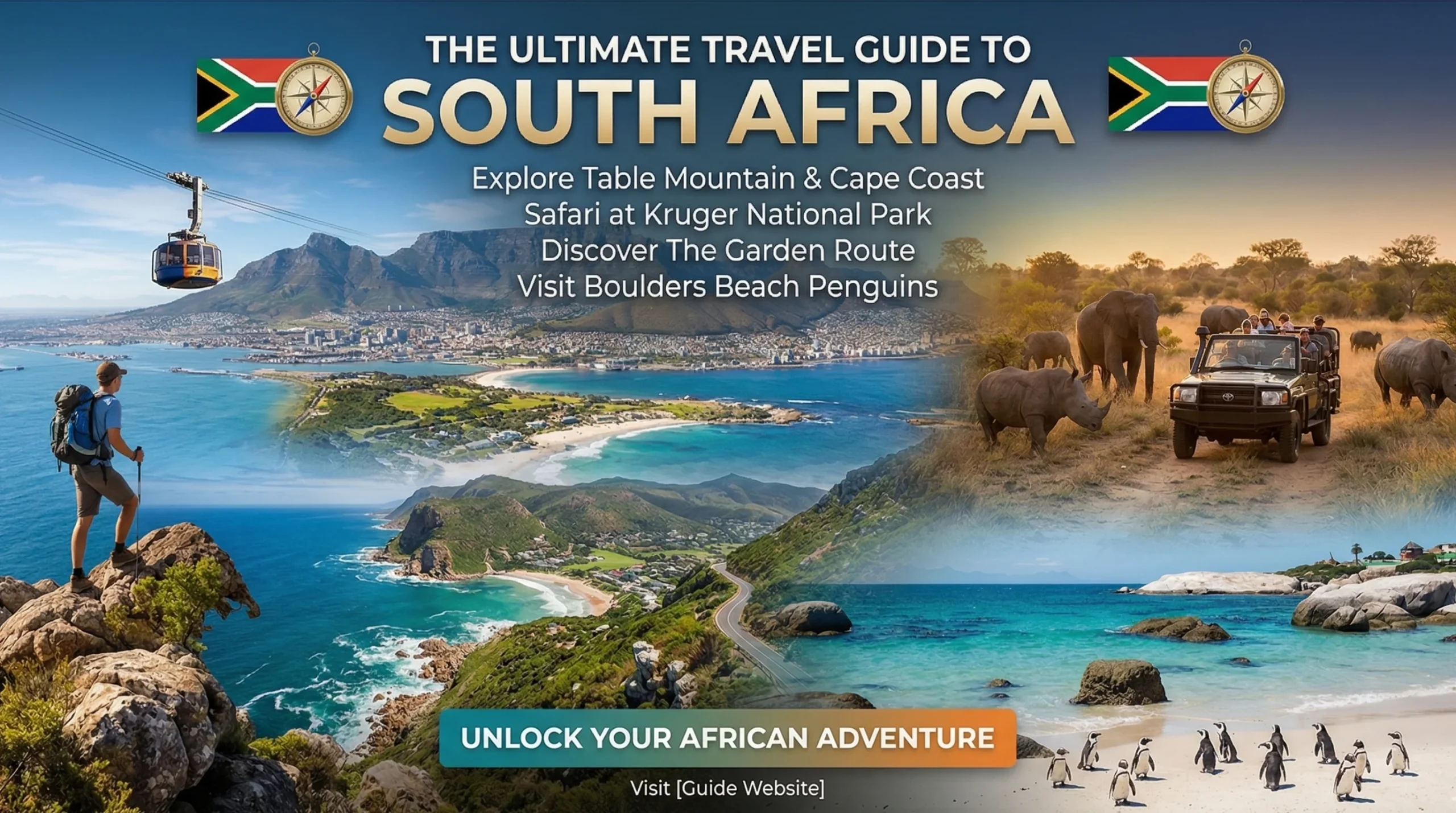
South Africa occupies the southern tip of the African continent and offers enormous geographic and cultural diversity. Fodor’s travel writers describe it as a place where lions roam game reserves, vineyards drape the hills of the Cape Winelands, mountains plunge into the sea along warm beaches and cosmopolitan cities thrive. This guide highlights the country’s most rewarding destinations and provides practical tips to plan a safe, memorable visit.
Regional highlights and must‑see destinations
Western Cape – Cape Town, Garden Route and the Winelands
- Cape Town – South Africa’s oldest city sits between Table Mountain and the Atlantic Ocean. The Lonely Planet notes that travellers can ride a cable car up Table Mountain, explore the historic V&A Waterfront, visit the colourful houses of Bo‑Kaap, or surf at Muizenberg. A ferry from the waterfront visits Robben Island, where a prison, hospital and military base once stood; today the World Heritage Site symbolises the triumph of democracy and contains historic quarries, a lighthouse and the apartheid‑era prison.
- Cape Winelands – The Winelands east of Cape Town are renowned for Cape Dutch architecture, vineyards and excellent food. Stellenbosch has oak‑lined streets, art galleries and a university; visitors can tour nearby estates by bike or wine‑tram. Franschhoek sits in a valley and emphasises food; both towns form part of the Cape Winelands where travellers can hike in Jonkershoek Nature Reserve, ride horses or relax at spas. The best time for harvest activities is January – April, especially February and March.
- Garden Route – Stretching along the south coast from Mossel Bay to Stormsrivier, the Garden Route National Park encompasses beaches, lagoons and indigenous forests. Knysna, known as the “jewel of the Garden Route,” offers beaches, forest trails, sunset cruises and kayak tours. Plettenberg Bay and Wilderness offer more beaches, whale watching and hiking. In spring (August – September) the Wild Flower Route in Namaqualand bursts into colour; over 3,500 floral species emerge, particularly in the Hantam National Botanical Garden and Namaqua National Park.
- Hermanus & Walker Bay – The seaside town of Hermanus is world‑famous for land‑based whale watching. Southern Right whales gather in Walker Bay between June and December to mate and calve; humpback whales migrate May–December and Bryde’s whales can be seen year‑round. The bay is a protected Whale Sanctuary Marine Protected Area; visitors stroll along cliff paths, watch the resident “whale crier” signal sightings and join the September Whale Festival.
- Namaqualand & West Coast – In the semi‑desert Namaqualand, quiver trees and dramatic rock formations are covered by carpets of daisies during the wildflower season (late August – September). Goegap and Skilpad nature reserves offer hiking trails, eco‑drives and biking; pack walking shoes, sunblock and water.
Gauteng – Johannesburg and Pretoria
- Johannesburg – Often called “Joburg,” the country’s economic heart blends history with creativity. The Lonely Planet notes that visitors can discover the city’s role in the anti‑apartheid struggle at the Apartheid Museum, tour the vibrant township of Soweto, admire street art in the Maboneng Precinct, and experience the city’s booming food scene. Upscale Sandton City offers shopping and dining. Stay vigilant in the city; government advisories warn that violent crime and carjackings can occur, so travellers should avoid walking alone at night and take reliable taxis.
- Pretoria – The administrative capital is known for its jacaranda‑lined streets and historic Union Buildings. While not covered in our citations, it is near Johannesburg and serves as a gateway to the North West and Limpopo provinces.
Eastern Cape – Wild Coast, Addo Elephant Park & Port Elizabeth
- Addo Elephant National Park – Established in 1931 to protect just 11 elephants, Addo now covers more than 180,000 ha and includes a marine reserve. The park hosts over 600 elephants and numerous Cape buffalo, black rhino, leopards and antelope; lions and spotted hyenas were reintroduced in 2004. In the marine area, southern right whales and great white sharks extend the park’s “Big Five” to a “Big Seven”. Many female elephants are tuskless due to the genetic bottleneck when the population was reduced to 11, but there is almost no poaching.
- Wild Coast & Transkei – A rugged stretch of coastline characterised by rolling hills, traditional villages and untouched beaches. Wanderlust reports that the new GweGwe Beach Lodge at Mkambati adds eco‑friendly luxury to the Wild Coast. Another major project is Club Med’s beach and safari resort on KwaZulu‑Natal’s Dolphin Coast (opening July 2026).
- Port Elizabeth (Gqeberha) – This port city near Addo offers beaches and a friendly atmosphere. Notably, it will host emerging conservation tours focusing on pangolins and rhinos as part of South Africa’s 2026 tourism push.
KwaZulu‑Natal – Durban & iSimangaliso Wetland Park
- Durban & uShaka Marine World – Durban’s Golden Mile is famous for warm water and surf. uShaka Marine World, a 16‑hectare theme park opened in 2004, contains Africa’s largest aquarium (7th largest worldwide), a Wet ’n Wild water park, an open‑air Village Walk and a rope‑course called Chimp & Zee. The aquarium holds 4.6 million gallons of water and houses around 10,000 animals. Nearby, visitors can dive at the Aliwal Shoal, browse Indian markets or enjoy Durban’s spicy cuisine.
- iSimangaliso Wetland Park – Maputo National Park – This World Heritage Site covers 397,403 ha of marine, coastal, wetland, lake and forest ecosystems. Its coral reefs, long sandy beaches, dunes, lakes, mangroves and swamps host over 6,500 recorded plant and animal species including nesting loggerhead and leatherback turtles, dolphins and migrating whales. The park is home to hippos, crocodiles and rhinos, and offers boat safaris on Lake St Lucia, snorkelling and turtle tours.
- Hluhluwe‑iMfolozi Park – Africa’s oldest proclaimed nature reserve played a pivotal role in rescuing the white rhinoceros from near extinction. By the mid‑20th century only a few hundred white rhinos remained; conservationists at Hluhluwe and neighbouring iMfolozi spearheaded breeding and translocation programmes that now support the world’s largest white rhino population. The park also hosts the Big Five plus African wild dogs, cheetahs, giraffes, zebras and more than 300 bird species. Its habitats range from dense forests to rolling savannah, and the dry winter months (May–September) offer excellent wildlife viewing while summer (November–March) brings lush landscapes and prolific birdlife.
- Adventure & new attractions – KwaZulu‑Natal will soon host the Club Med resort (2026), while adrenaline‑seekers can ride the 3.2 km K3 zipline or the Cape Canopy Tour near Cape Town, both highlighted by Wanderlust.
Mpumalanga & Limpopo – Kruger National Park & Panorama Route
- Kruger National Park – South Africa’s flagship safari park is one of Africa’s largest, offering exceptional wildlife encounters. It supports the “Big Five” mammals – lions, leopards, elephants, rhinos and buffalo. Guided game drives and walking safaris with experienced rangers increase the chance of sightings; travellers should respect park rules (stay in vehicles, maintain a safe distance and avoid feeding animals). July to September (dry winter) is ideal for wildlife viewing when animals congregate at waterholes.
- Blyde River Canyon & Panorama Route – The Blyde River Canyon is the world’s third‑largest canyon and the largest “green” canyon due to its subtropical vegetation. The Panorama Route loops past dramatic viewpoints such as Bourke’s Luck Potholes, carved by swirling waters; the Three Rondavels, rock formations resembling traditional huts; the Pinnacle Rock and God’s Window, which offers views across the Lowveld; waterfalls like Lisbon and Mac‑Mac Falls; and the historic mining village of Pilgrim’s Rest. A two‑hour boat cruise through the canyon lets visitors see hippos and crocodiles.
- Drakensberg Mountains – The uKhahlamba–Drakensberg Park features towering basalt buttresses, sandstone cliffs, alpine grasslands and numerous rivers. Hikers can tackle trails to the Tugela Falls (one of the world’s tallest waterfalls) or explore caves containing more than 35,000 San rock art paintings dating back up to 4,000 years. The high altitude means temperatures drop quickly; travellers should pack warm gear, maps and proper boots.
Northern Cape & Kalahari – Wildflowers & Desert Safari
- Namaqualand & Wild Flower Route – Each spring (August – September) over 3,500 plant species carpet Namaqualand with blooms. The Hantam National Botanical Garden near Nieuwoudtville is called the “bulb capital of the world,” while Namaqua National Park offers eco‑trails, day drives and mountain‑bike routes. Carry binoculars and sun protection; flowers remain closed on overcast or rainy days.
- Kgalagadi Transfrontier Park – Formed in 2000 by joining Botswana’s Gemsbok National Park and South Africa’s Kalahari Gemsbok National Park, this 28,400 km² protected area is one of Africa’s largest arid wildernesses. Shifting red dunes and dry riverbeds are home to herds of springbok, gemsbok, eland and wildebeest; predators include roughly 450 lions, 200 cheetahs, 100 leopards and 600 brown hyenas. More than 250 bird species inhabit the park. Access requires a 4×4 vehicle; the remote Mabuasehube section features salt pans and rustic campsites.
- Augrabies Falls National Park – Named after the Khoekhoe word Ankoerebis (“place of great noise”), the Augrabies Falls plunges about 60 m into a granite gorge averaging 240 m deep and extending 18 km. Established as a national park in 1966, the area features quiver trees (Aloidendron dichotomum) whose branches were traditionally used by San hunters to make arrow quivers. Wildlife includes springbok, gemsbok, the endangered south‑central black rhinoceros, Cape clawless otter, black‑backed jackal, caracal, bat‑eared fox, African wildcat and various sandgrouse species. Visitors can walk the 5 km Dassie Trail, tackle the 14.4 km Klipspringer Trail or join guided night drives during peak season; the park lies about eight hours by road from Cape Town and ten hours from Johannesburg.
- Karoo National Park – This semi‑desert park reintroduced lions and black rhinos but sightings are rare. It offers excellent viewing of antelope such as springbok, gemsbok, eland, red hartebeest and klipspringer, along with suricates (meerkats), Burchell’s zebras and the rare Cape mountain zebra. Black wildebeest often mingle with zebra herds and several tortoise species inhabit the park. The cooler winter months (May–September) are best for game viewing, as summer heat can be extreme.
Safari & wildlife experiences
South Africa’s varied habitats support remarkable wildlife. The Big Five – lion, leopard, elephant, rhinoceros and Cape buffalo – can be observed in game reserves such as Kruger. In Addo Elephant National Park, marine protections expand this to a “Big Seven”, adding whales and great white sharks. The iSimangaliso Wetland Park shelters nesting turtles, dolphins and migrating whales, while Hermanus offers close‑range whale watching from June to December. Desert parks like Kgalagadi host iconic predators like black‑maned lions and cheetahs.
Cultural & historical experiences
- Robben Island – This island off Cape Town was used as a prison, hospital and military base from the 17th century through the apartheid era. Its maximum‑security prison for political prisoners is preserved as a symbol of freedom; other features include historic quarries, a lighthouse, leper graveyard and the tomb of Hadije Kramat.
- Apartheid Museum & Soweto – In Johannesburg, the Apartheid Museum recounts the struggle against racial segregation, while guided tours of Soweto explain township history and visit landmarks like Vilakazi Street. These experiences highlight the resilience and creativity of South Africans.
- San rock art – The Drakensberg mountains preserve the largest collection of San rock art south of the Sahara, with some 35,000 images up to 4,000 years old. Many paintings depict hunters, animals and spiritual scenes; guided hikes visit accessible rock shelters.
- Bo‑Kaap & Cape Malay culture – Cape Town’s Bo‑Kaap neighbourhood is famous for its brightly painted houses and Cape Malay heritage. Visitors can explore spice shops, mosques and learn to cook bobotie or koeksisters.
Festivals & cultural events
- Cape Town Minstrel Carnival (Kaapse Klopse) – Each January, Cape Town hosts a carnival rooted in the city’s slave history. On 2 January (known locally as Tweede Nuwe Jaar), thousands of minstrels wearing colourful costumes and painted faces parade through the streets playing banjos, guitars, trumpets, trombones and traditional ghoema drums. Troupes, known as klopse, practise for months in advance and the festivities include Christmas Eve and New Year’s Eve concerts featuring Christmas and Malay choirs.
- National Arts Festival – Africa’s largest arts festival takes place over 11 days in Makhanda (formerly Grahamstown) from the last week of June to the first week of July. Organised by a non‑profit, the festival comprises a main programme and a fringe festival with theatre, dance, comedy, live music, films, talks, workshops, visual art exhibitions, a children’s arts festival and food and craft markets across roughly 60 venues. The event draws performers and visitors from around the world and contributes significantly to the regional economy.
Cuisine & food culture
- Bobotie – Considered South Africa’s national dish, this savoury mince pie blends minced beef or lamb with curry powder, cumin, turmeric, dried fruits and nuts. The mixture is baked under an egg‑based custard and served with yellow rice, chutney and sambal. The word is derived from the Indonesian bobotok and the dish reflects the Cape Malay heritage.
- Braai (Shisa Nyama) – A braai is more than a barbecue; it is a social gathering where friends and family cook meat over hot coals. Boerewors (spiced beef sausage) sizzles alongside steaks and lamb chops, while side dishes like potato bake, chakalaka (spicy relish of beans and vegetables), braaibroodjies (grilled cheese and tomato sandwiches) and braaied mielies (grilled corn) are passed around. South Africans celebrate National Braai Day on 24 September (Heritage Day).
- Bunny chow – A street‑food favourite originating in Durban’s Indian community. A hollowed‑out half‑loaf of bread is filled with curry made from chicken, lamb or vegetables; the dish is eaten with the hands and its name derives from the “Bania” caste of Indian traders.
- Biltong & droëwors – Biltong is air‑dried, cured strips of beef, game or ostrich seasoned with coriander, black pepper and vinegar. Similar to jerky but thicker and more tender, it makes a protein‑packed snack for road trips. Droëwors, dried spiced sausages, offer another portable option.
- Potjiekos – Meaning “small‑pot food,” potjiekos is a slow‑cooked stew prepared outdoors in a cast‑iron, three‑legged pot. Layers of meat, vegetables and potatoes are simmered with wine, beer or stock and aromatic spices. The pot is seldom stirred, allowing each layer to retain its texture; communal potjie gatherings are popular at campsites and festivals.
Adventure & outdoor activities
- Hiking & trekking – From the trails of Table Mountain to multi‑day hikes along the Otter Trail on the Garden Route, South Africa caters to walkers. Drakensberg hikes require good fitness and cold‑weather gear.
- Water sports – Surf at Muizenberg or Jeffrey’s Bay, kayak on the Knysna lagoon and snorkel or dive at Sodwana Bay and Aliwal Shoal. Boat cruises on the Blyde River Canyon reveal wildlife and stunning scenery.
- Ziplining & canopy tours – The K3 zipline (3.2 km) near Cape Town and the Cape Canopy Tour offer adrenaline‑filled rides across mountains.
- Whale, dolphin & turtle tours – Join boat trips from Hermanus or St Lucia to see southern right whales (June–Dec), humpbacks, Bryde’s whales and nesting loggerhead and leatherback turtles.
- Flower watching & star‑gazing – Visit Namaqualand in spring for blooms, and the Kalahari for clear night skies and desert landscapes.
Travel tips & practical information
Safety & security
- The U.S. and UK governments advise increased caution in South Africa due to crime, civil unrest and terrorism. Violent muggings, carjackings and armed robbery occur in urban areas; travellers should avoid displaying valuables, stay off deserted streets after dark and use reputable taxis or rideshare services. Carjackings and “smash‑and‑grab” thefts occur at traffic lights; keep doors locked and windows up and leave space to manoeuvre when stopping.
- At airports, remain alert to luggage theft; criminals may pose as taxi drivers or tour operators. Avoid protests and follow local media for updates.
Visas & entry requirements
- Visa‑exempt visitors: Citizens of many countries (including the U.S.) do not need a visa for stays under 90 days. Passports must be valid for at least 30 days beyond the departure date and contain two blank pages; a yellow‑fever certificate is required if arriving from a risk country. Travellers must declare cash exceeding 25,000 ZAR or USD 10,000 when entering or leaving.
- Pakistani travellers: Pakistanis require a visitor visa; the fee is PKR 5,300 plus a USD 50 service charge and applications take about 10 days. Bank statements must be in the applicant’s name and photos must meet specification. According to Sherpa, the e‑visa system is experiencing technical issues and travellers should apply through the nearest South African embassy.
Health & vaccinations
- Travellers arriving from yellow‑fever‑risk countries must show proof of vaccination. Mosquito‑borne diseases like malaria occur in parts of Limpopo, Mpumalanga and KwaZulu‑Natal; consult a doctor about prophylaxis and use insect repellent and bed nets. Tap water is generally safe in cities but bottled water is recommended in rural areas.
Money, tipping & services
- South Africa uses the South African Rand (ZAR). Credit cards are widely accepted in cities, but cash is useful for small purchases and tips.
- Tipping is customary: restaurant staff expect about 10 % and 12–15 % is appreciated; petrol station attendants should receive R5–R10, and informal car guards R5–R10 depending on service. It is polite to tip tour guides and safari trackers.
- At petrol stations, attendants pump fuel and may clean windscreens and check oil; tipping acknowledges their service.
Electricity & load‑shedding
- South Africa experiences planned power outages known as load‑shedding. Depending on the stage, power can be off for two to twelve hours a day; major hotels often have generators but smaller guesthouses may not. An app such as EskomSePush provides outage schedules and notifications. Carry a power bank and headlamp.
Transportation & driving
- Road travel – Roads are generally good, but distances are long and wildlife or livestock may wander onto rural routes. In South Africa the emergency lane on the left side of single‑carriage highways is used by slower vehicles to let faster traffic pass. Carjackings can occur; keep doors locked and plan routes to avoid high‑crime areas.
- Public transport – City bus rapid transit systems like Cape Town’s MyCiTi (launched in 2013) and Johannesburg’s Rea Vaya are clean and modern but have limited coverage. MyCiTi connects the airport, V&A Waterfront, Table Mountain and Camps Bay; passengers must purchase a reloadable myconnect card and stations have security and staff. Minibus taxis are unsafe; use metered taxis or rideshare services (Uber, Bolt).
- Gautrain – A rapid‑rail network linking Johannesburg, Pretoria and O.R. Tambo International Airport. Trains are safe, punctual and air‑conditioned, making them ideal for airport transfers and commuting.
- Long‑distance buses – Companies such as Intercape and Greyhound operate comfortable coaches between major cities; the Baz Bus hop‑on hop‑off service caters to backpackers, stopping at hostels across the country. Book tickets early and remain vigilant at stations.
- Car hire & 4×4 travel – Renting a car offers flexibility, especially for reaching remote parks and coastlines. Drive on the left and carry an international licence. A 4×4 is essential for Kgalagadi and Mabuasehube. Avoid driving at night and leave valuables out of sight.
- Domestic flights – Frequent flights link major cities such as Johannesburg, Cape Town, Durban and Port Elizabeth. Reservations should be made early during peak season and baggage limits vary by airline.
Best time to visit
- Wildlife viewing: Dry winter months (June – September) are best for safaris in Kruger and Kgalagadi because animals gather at water sources.
- Beach and city breaks: Southern summer (November – March) offers warm weather for Cape Town’s beaches and the Garden Route.
- Wildflower season: Late August through September is peak blooming in Namaqualand.
- Whale watching: Southern right whales visit Hermanus from June to December, with peak sightings in October and November.
2026 trends and new experiences
South Africa’s tourism sector rebounded strongly in 2025 and expects record visitors in 2026. New designer hotels like Cape Town’s Cole and Mama Shelter, wellness trends like early‑morning coffee raves, and events like the Gravel Burn race and AfrikaBurn festival are attracting repeat travellers. Conservation‑focused experiences (pangolin safaris, rhino tracking), the Wild Coast’s new eco‑lodges and the upcoming Club Med resort indicate ongoing investment in sustainable tourism.
Conclusion
South Africa rewards travellers with an extraordinary mix of wildlife, landscapes, cultures and adventures. Whether you’re tracking lions in Kruger, sipping Chenin Blanc in Stellenbosch, admiring San rock art in the Drakensberg or watching whales breach off Hermanus, the country offers unforgettable experiences. Planning ahead—respecting safety advisories, packing for variable weather and booking popular attractions early—will help ensure a smooth journey. Use this guide to inspire your itinerary, and enjoy exploring the Rainbow Nation.